Everyday nutrition
Dietary fiber and gut health: more than a microbiome score
Fiber can support bowel function, but different fibers and different people do not respond identically. Microbial changes are not a diagnosis or a cure.
Q8pass Society
Unreviewed article, released by authorization of Q8pass Society. AI-assisted text and translation; claims await human review. No medical review.
Published · Updated · v1
≈ 3 min readEvidence and limitations4 sources
Leer en español
Fiber is a group, not a single intervention
Beans, oats, fruit, and vegetables can contribute fiber in ordinary meals. NIDDK’s constipation guidance recommends adding it gradually and drinking appropriate liquids. That practical advice concerns bowel function; it does not promise that one ingredient will repair every digestive problem. A large increase overnight may be uncomfortable rather than helpful. [1]
Soluble and insoluble fiber behave differently, and ‘more’ is not the complete answer for irritable bowel syndrome. NIDDK notes that soluble fiber may be more helpful for IBS symptoms and that adding too much at once can cause gas. A restrictive diet for persistent symptoms deserves individualized guidance, not a permanent internet exclusion list. [2]
Separate long-term associations from experiments
Reynolds and colleagues combined prospective studies and randomized trials in a 2019 evidence synthesis. Higher fiber intake was associated with lower mortality and several disease outcomes in cohorts. Trials showed improvements in some risk factors. These two designs answer different questions: the cohort results do not prove that fiber alone caused every difference between people’s diets and health. [3]
The synthesis found favorable results around 25–29 g daily, but this is not a guaranteed threshold or a personalized prescription. Age, clinical context, baseline intake, and the foods replacing others matter. A gram target also says little about which fiber types someone tolerates. [3]
What a microbiome study can—and cannot—show
A 17-week randomized study enrolled 36 healthy adults, 18 per group, to examine high-fiber and fermented-food diets. The fiber intervention changed microbial carbohydrate-processing capacity without increasing community diversity, and its primary cytokine-response score did not change. The fermented-food group showed different microbial and inflammatory-marker changes. [4]
This was an intensive, small study of biological measurements. It did not establish treatment of inflammatory disease, compare every fermented food, or show that all people need the same microbial profile. The results challenge a simple ‘more fiber equals more diversity equals better health’ story. Do not use a commercial microbiome score as a substitute for symptoms and clinical assessment. [4]
Make a change you can evaluate
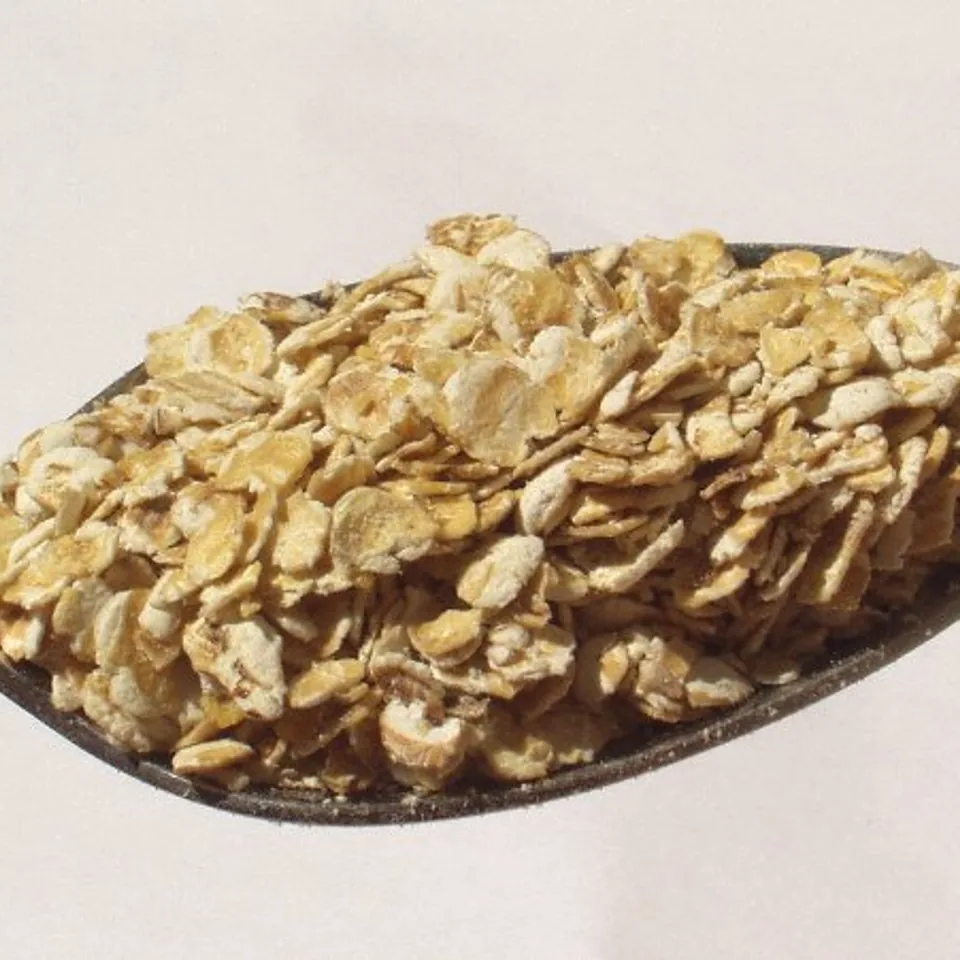
One manageable step is to add a tolerated fiber-containing food to a familiar meal, then observe comfort and bowel patterns before increasing again. Beans and oats are possibilities, not compulsory foods. Check the actual prepared portion: a dry weight and a cooked weight are not interchangeable. The linked catalog reports composition, not a predicted personal gut response.
Persistent constipation or abdominal symptoms can have causes beyond fiber intake. General food advice cannot establish which cause applies to you. If a clinician has advised a modified-fiber diet or a fluid limit, that instruction takes priority over a generic increase. The goal is a workable pattern, not the highest possible fiber number. [1] [2]
Evidence summary
Established findings
- Fiber-containing foods and appropriate fluids can support constipation management. [1]
Uncertainty
Observational associations
- Higher-fiber diets were associated with better long-term outcomes in cohorts; residual confounding remains possible. [3]
Related reading

Bibliography
Sources were checked during preparation, some at abstract level. Full-text interpretation and linked corrections still await editorial review.
- Eating, Diet, & Nutrition for Constipation · NIH NIDDK · Accessed: 2026-09-13
- Eating, Diet, & Nutrition for Irritable Bowel Syndrome · NIH NIDDK · Accessed: 2026-09-13
- Carbohydrate quality and human health: a series of systematic reviews and meta-analyses · Reynolds A, Mann J, Cummings J, Winter N, et al. · Published: 2019-02-02 · DOI: 10.1016/S0140-6736(18)31809-9 · PMID: 30638909 · Accessed: 2026-09-13
- Gut-microbiota-targeted diets modulate human immune status · Wastyk HC, Fragiadakis GK, Perelman D, Dahan D, et al. · Published: 2021-08-05 · DOI: 10.1016/j.cell.2021.06.019 · PMID: 34256014 · Accessed: 2026-09-13
Keep the conversation going.
Everyone can like an article. A functional cookie remembers your choice in this browser, with no advertising or cross-site tracking.
Loading conversation…
Comments
Only signed-in members with verified payment can comment. Comments are checked before appearing; they are not evidence or medical advice.
Checking access…