Everyday nutrition
Cooking oils: what are you replacing?
The useful comparison is between amounts, fatty-acid profiles, and the foods an oil replaces—not a list of perfect or poisonous bottles.
Q8pass Society
Unreviewed article, released by authorization of Q8pass Society. AI-assisted text and translation; claims await human review. No medical review.
Published · Updated · v1
≈ 3 min readEvidence and limitations5 sources
Leer en español
Start with the comparison, not the label
An oil recommendation is incomplete until it says what changes in the meal. Adding oil on top of everything else is different from replacing a hard fat. WHO’s 2023 guidance favors unsaturated fats and describes suitable replacements for saturated fat, including polyunsaturated fat and fiber-rich carbohydrate foods. It does not require an expensive specialty oil. [1] [2]
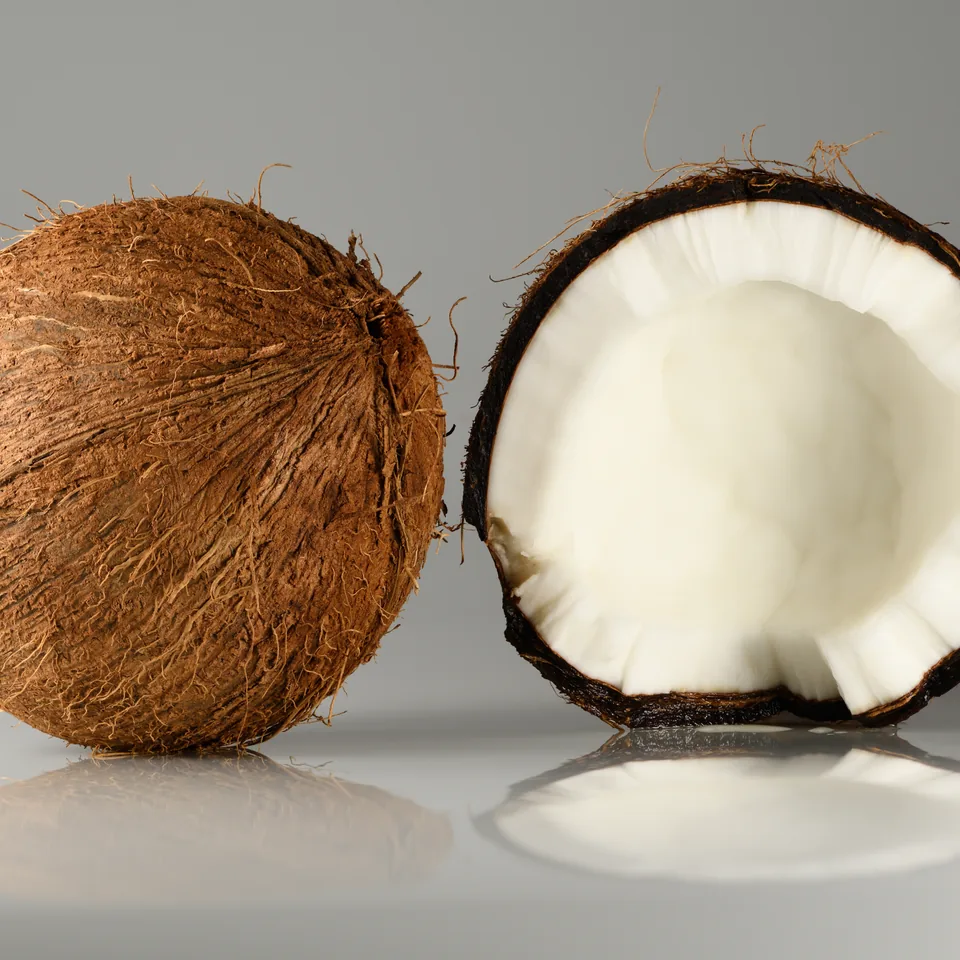
For an everyday choice, compare the same quantity and the actual product. ‘Vegetable’ does not identify one fatty-acid profile: coconut and palm oils are relatively rich in saturated fat. A food’s origin is therefore a poor shortcut for deciding what substitution a study tested. [2]
What human trials measured
The updated 2020 Cochrane review included 15 randomized trials involving 56,675 adults, with interventions lasting at least two years. Lower saturated-fat intake was associated with fewer combined cardiovascular events; the pooled relative risk was 0.83, with a 95% confidence interval of 0.70–0.98. There was little or no effect on overall mortality. The trials tested different dietary changes, not one universally best bottle. [3]
A separate meta-analysis of 16 articles found that coconut oil increased LDL cholesterol compared with nontropical vegetable oils. Interventions lasted at least two weeks. The outcomes were mainly risk markers, not heart attacks; an increase in HDL did not establish a protective clinical effect. Product, comparator, and duration limit extrapolation. [4]
Heating does not settle the health question
Smoke point alone cannot answer a long-term cardiovascular question. The trials above do not establish a safe number of frying cycles or prove that every oil used in a hot pan becomes poisonous. Treat smoke, storage, and cooking instructions as a separate practical question from the tested dietary substitutions. Do not turn a laboratory oxidation result into a claim about a person’s disease risk. [3] [4]
WHO distinguishes industrial partially hydrogenated oils from the smaller amounts of trans fats that can form during high-temperature frying. Those are different processes and exposures. A headline that describes all seed oils as equivalent to partially hydrogenated fat erases that distinction. [5]
A realistic kitchen decision
Use an affordable oil suited to the dish and its product instructions, and consider replacing rather than simply adding fat. Record the amount used across the whole recipe, including dressings and frying additions. Bitameans composition comparisons can help describe that amount; they cannot rank an oil as a treatment or predict an individual’s outcome.
The evidence here concerns general dietary choices and studied adults. It does not determine a therapeutic fat prescription for a child, pregnancy, malabsorption, or another clinical situation. Food allergy and product ingredients also remain relevant even when the fatty-acid profile seems suitable. The sensible question is which feasible substitution fits the whole meal—not which oil deserves unlimited use.
Evidence summary
Established findings
- Dietary substitutions have been tested in long-term adult trials. [3]
Uncertainty
Observational associations
Related reading
Bibliography
Sources were checked during preparation, some at abstract level. Full-text interpretation and linked corrections still await editorial review.
- Saturated fatty acid and trans-fatty acid intake for adults and children: WHO guideline · World Health Organization · Published: 2023-07-17 · Accessed: 2026-09-13
- WHO updates guidelines on fats and carbohydrates · World Health Organization · Published: 2023-07-17 · Accessed: 2026-09-13
- Reduction in saturated fat intake for cardiovascular disease · Hooper L, Martin N, Jimoh OF, Kirk C, et al. · Published: 2020-08-21 · DOI: 10.1002/14651858.CD011737.pub3 · PMID: 32827219 · Accessed: 2026-09-13
- The Effect of Coconut Oil Consumption on Cardiovascular Risk Factors: A Systematic Review and Meta-Analysis of Clinical Trials · Neelakantan N, Seah JYH, van Dam RM · Published: 2020-03-10 · DOI: 10.1161/CIRCULATIONAHA.119.043052 · PMID: 31928080 · Accessed: 2026-09-13
- Trans fat · World Health Organization · Published: 2024-01-24 · Accessed: 2026-09-13
Keep the conversation going.
Everyone can like an article. A functional cookie remembers your choice in this browser, with no advertising or cross-site tracking.
Loading conversation…
Comments
Only signed-in members with verified payment can comment. Comments are checked before appearing; they are not evidence or medical advice.
Checking access…